This month, we're diving into
살롱드립 (Salon Drip).
The August round is open now!
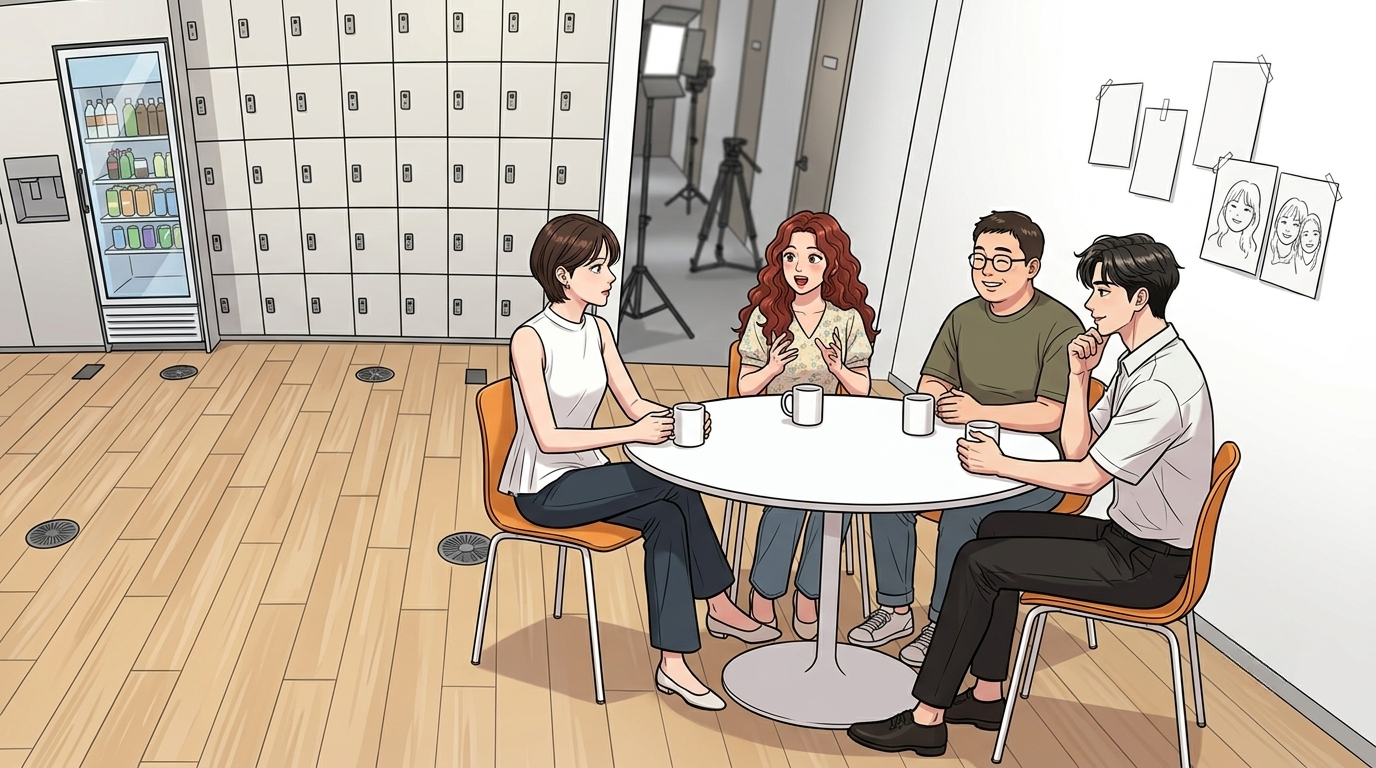
살롱드립 (Salon Drip) is a Korean talk show hosted by 장도연 (Jang Do-yeon), one of the most-loved comedians in Korea.
It's a simple setup. She sits down with one guest, and they just talk.
A salon is basically a place where people hang out and chat, and that's pretty much the whole show.
Stop understanding Korean
— start participating in it.
Train real reactions, timing, and conversation flow
through real Korean interactions.
A monthly speaking club where you don’t study Korean. You use it.
Learn through real variety show clips → record responses → get personal feedback.
Why this show?
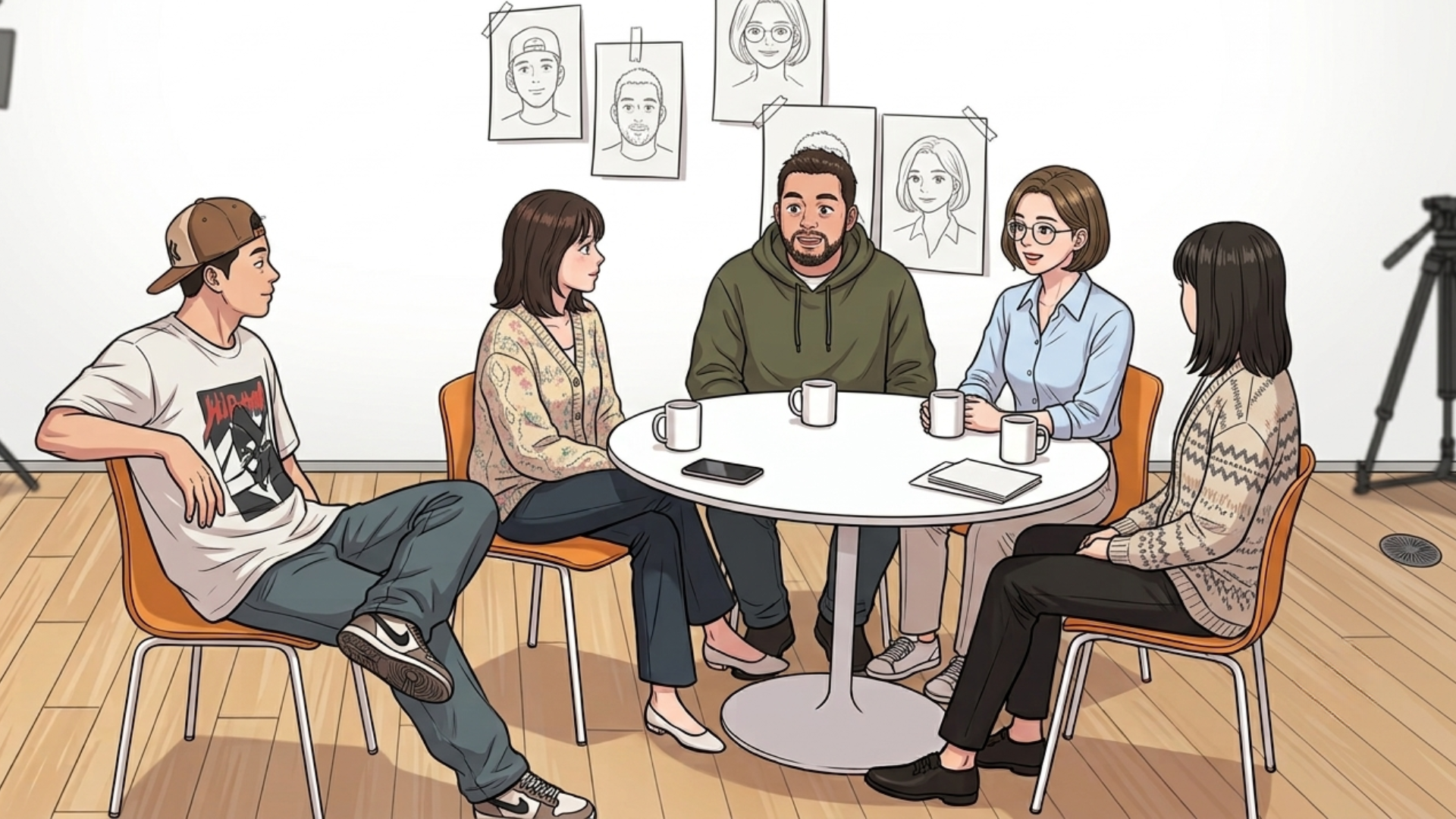
살롱드립 is about as close to a real conversation as Korean TV gets. There's no game, no competition, no pressure. It's just one guest sitting down to talk, so they take their time and actually say what they think. You get real, unhurried Korean instead of quick scripted lines.
And that's exactly why it works for you. A talk show is the situation you're actually training for. Someone tells a story, you react, you ask something, they keep going. That back-and-forth is what real Korean conversation is, and it's the one thing a textbook can't hand you.
Why Salon Drip is so good for learning Korean
You catch every word
It's a calm talk show, so people rarely talk over each other. Only one or two people speak at a time, so you don't have to pull apart a bunch of voices shouting at once like on survival shows. That makes it a lot easier to study with.
Learn how to tell your story
When you talk with people, most of what you're doing is telling some kind of story, right? This show teaches you how. The host asks a question and the guest walks through what happened in order, so you pick up that whole rhythm. The connectors Koreans use to keep a story going, the past tense, how to talk about what you like, what you've been through, how you felt about it. And how to work a fun joke in while you're at it.
Real reactions, not textbook ones
You also get to see the real reactions that keep a conversation going. When you're learning a language, knowing how to react is a big part of actually being able to talk. So listen for the back-channeling you won't really find in a textbook. Not just "맞아(Right)" or "진짜?(Really?)" but how people actually listen and show they relate, moment to moment.
Memes and slang as they're really used
You'll learn memes and slang the way they're really used. The guests range from veteran actors to young idols, so you'll hear everything from the everyday expressions grown-ups use to the newest slang Gen Z is throwing around.
See how Koreans address each other
You'll get to see the different ways Koreans address each other. Depending on their relationship with the host, some guests are close friends and some are meeting for the first time, so you can watch how they figure out the right way to address each other. And even though it's on TV, where people usually speak formally, a guest the host is close with will sometimes slip into casual speech. These little shifts in what to call someone and when to be formal or casual are some of the hardest parts of Korean. Instead of studying it from a textbook, watch it happen in a real situation and get a feel for how you'd respond and when.
Come learn the most natural Korean there is, straight from real conversations.
This isn't just watching and repeating
One grammar point, learned for real
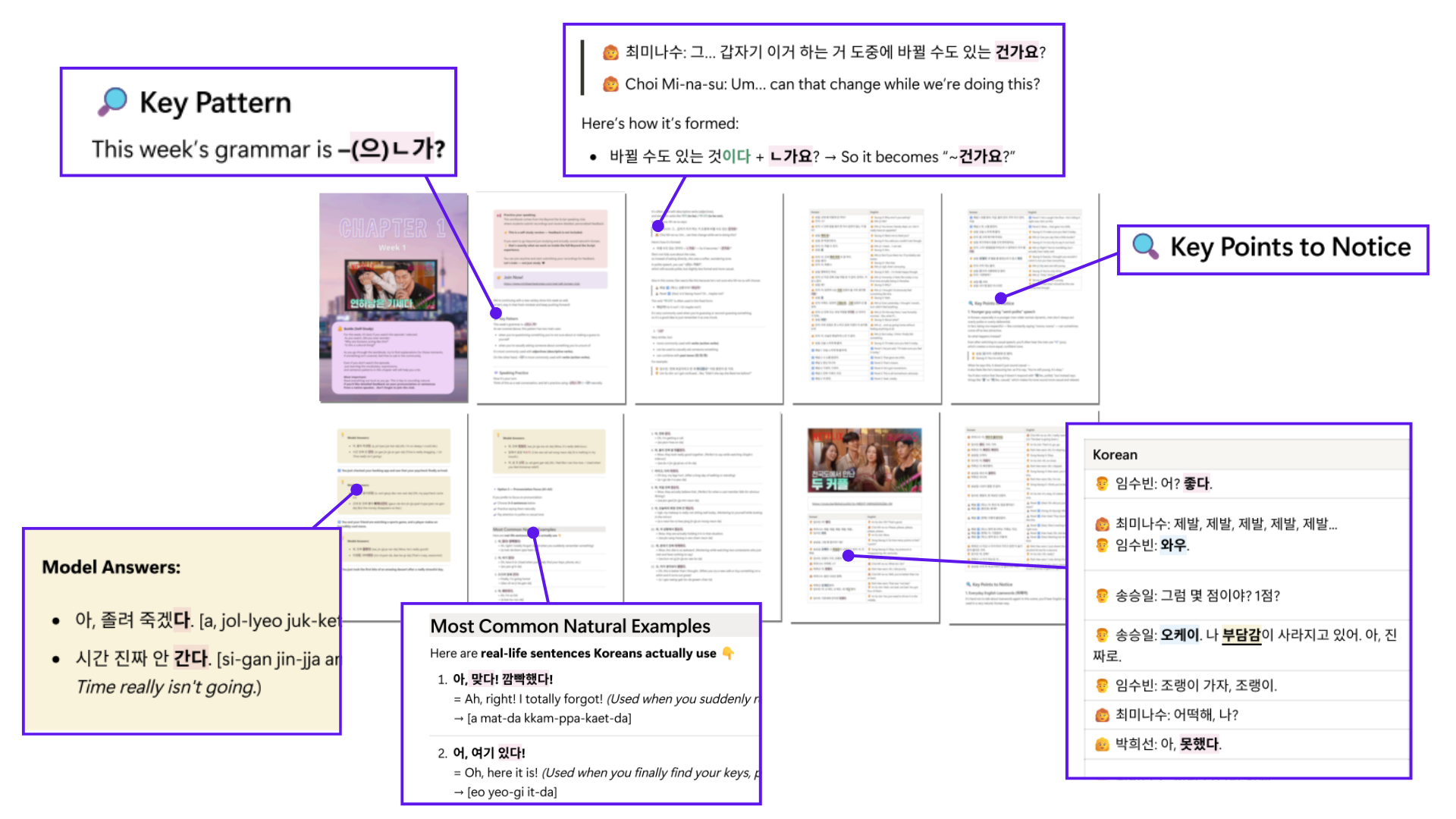
Every week is built around a grammar point you'll actually use. I go through the episode, pull the clip where that grammar shows up naturally, and build the week around it. So you're not just catching random phrases. You're learning one useful piece of Korean at a time, and seeing it land in a real conversation instead of a textbook example sentence.
By the end of the month, you've picked up several grammar patterns the way Koreans actually say them, not the way a textbook wishes they did.
And the workbook goes deeper than words
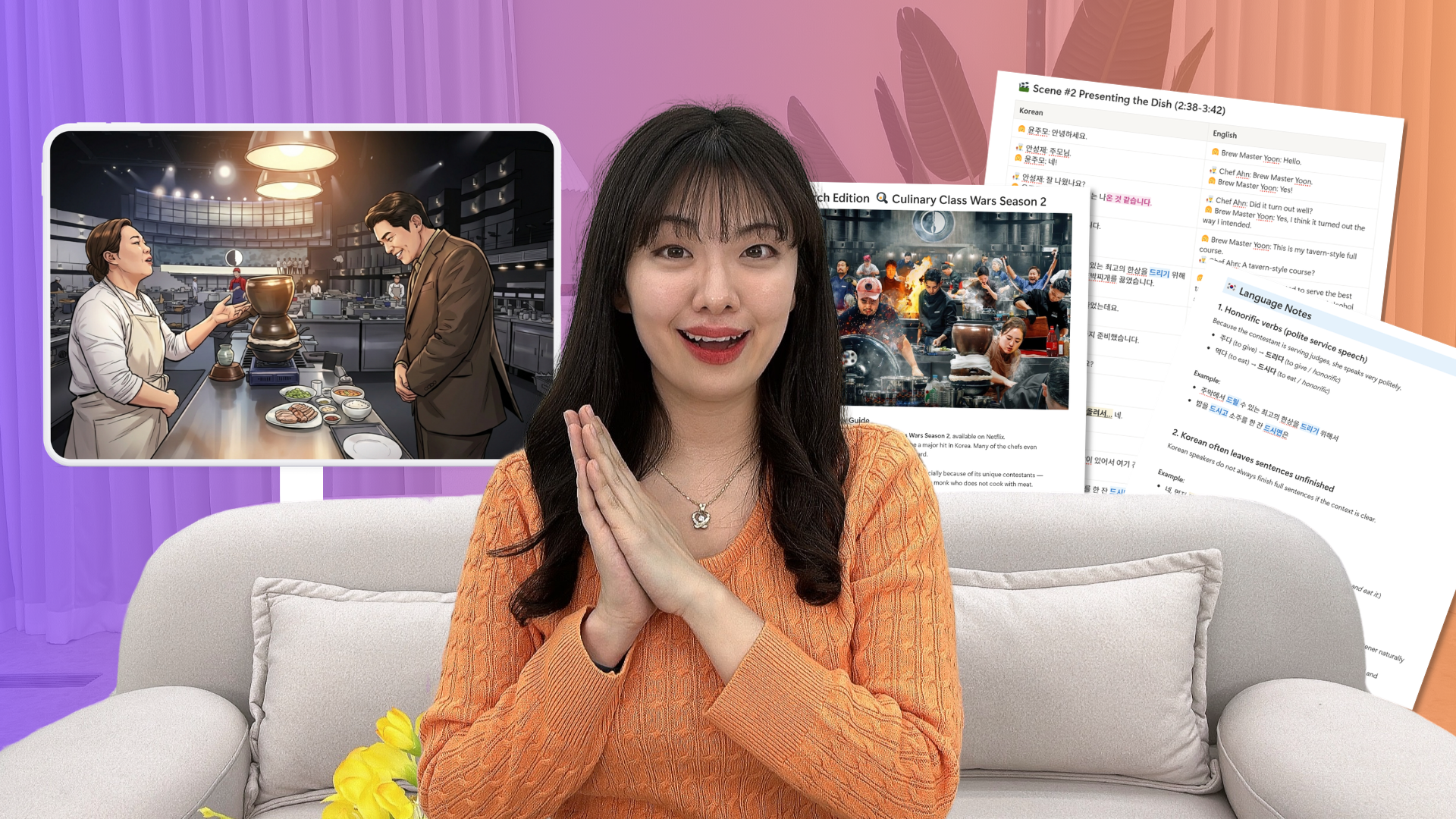
Each episode comes with a workbook, usually around 50 pages. It's not just a vocabulary list. Yes, you get the words and expressions that came up in that episode, but you also get the part textbooks always skip: why.
Why did everyone laugh there? Why did that one line make the room go quiet? Why did a guest look so touched by something that sounds ordinary if you just translate it? A lot of Korean doesn't make sense until you understand what's going on underneath it culturally. So the workbook walks you through that too, so you're not just memorizing lines, you're actually getting what's happening.
Each week you get the workbook, the audio files, and the clips to practice with. The first one goes out this week, so join now and you'll be in from the very first episode of the August round.
Serious about improving your Korean?
If you're a truly dedicated learner, I highly recommend our 90-Day Deep Dive.
Save 10% compared to a standard subscription.
The secret to mastering a language is consistency. Stay immersed and keep getting expert feedback over the long term for a truly deep learning experience.
But does it actually work?
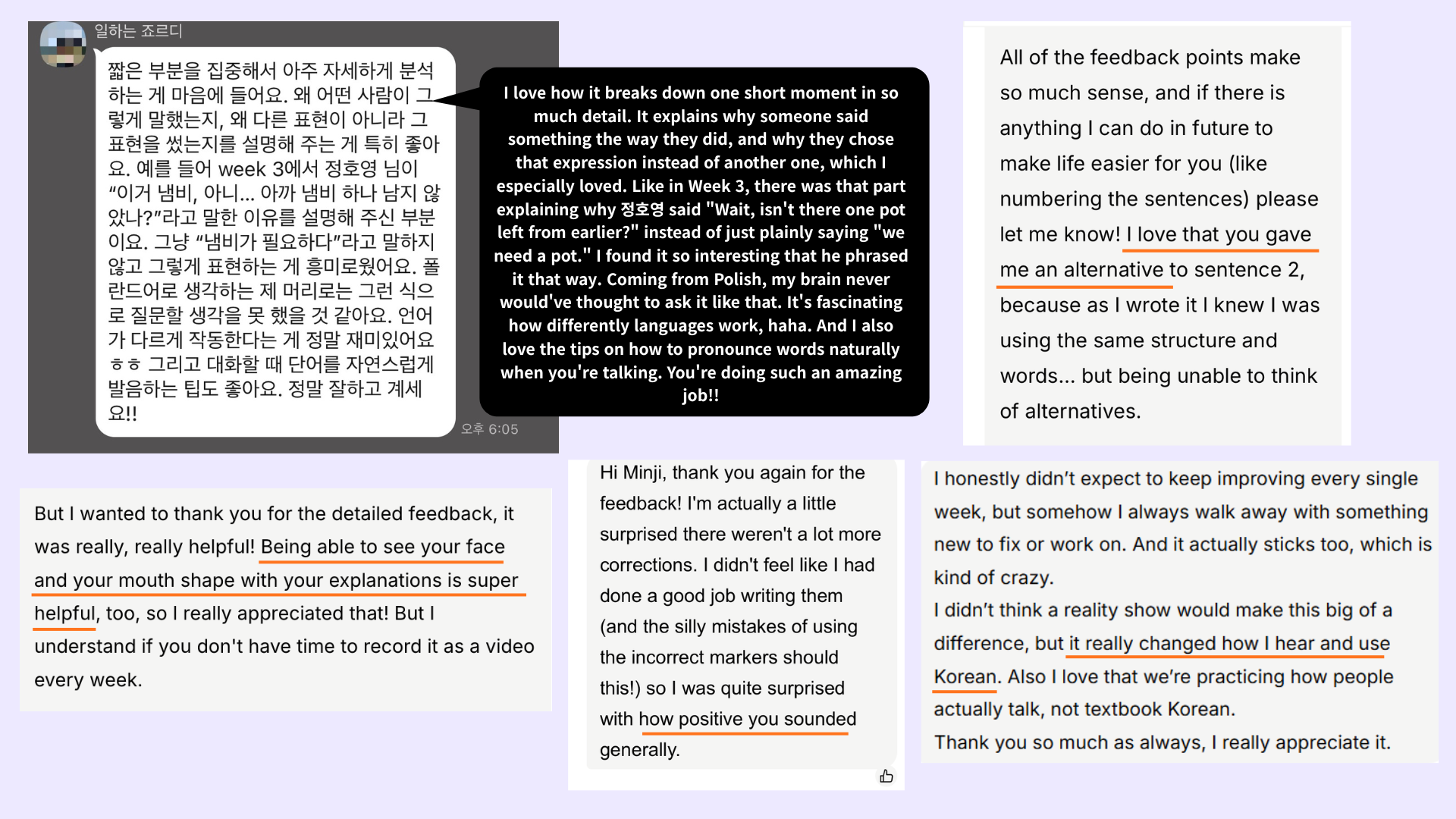
Take a look at how feedback actually goes out to students from our past cohorts.
As you can see, you'll receive personalized feedback on how you actually speak Korean, including your pronunciation, intonation, and sentence structure. Your feedback is delivered in two formats: video (MP4) and detailed PDF notes, so you know exactly what to fix and how to improve.
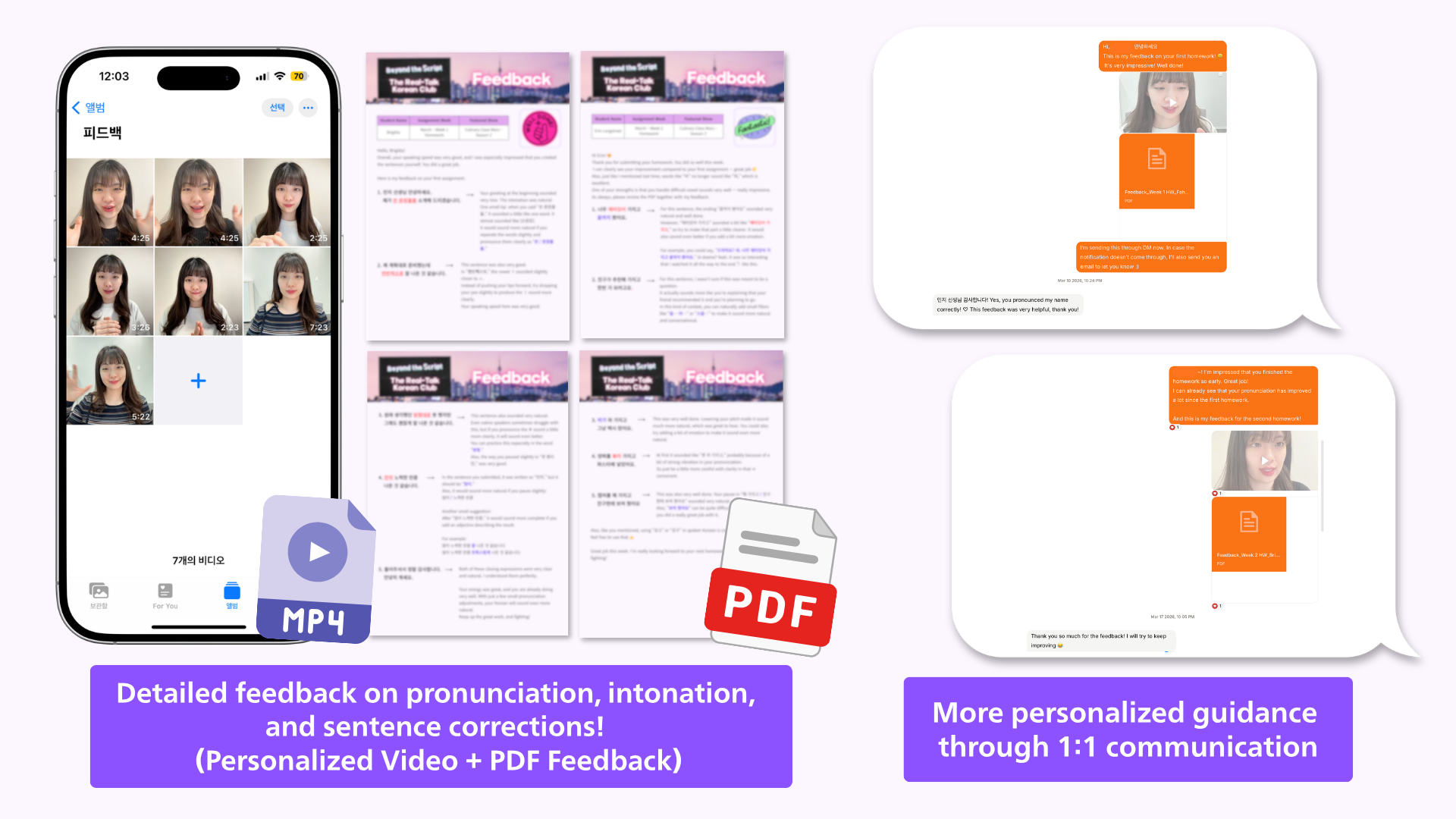
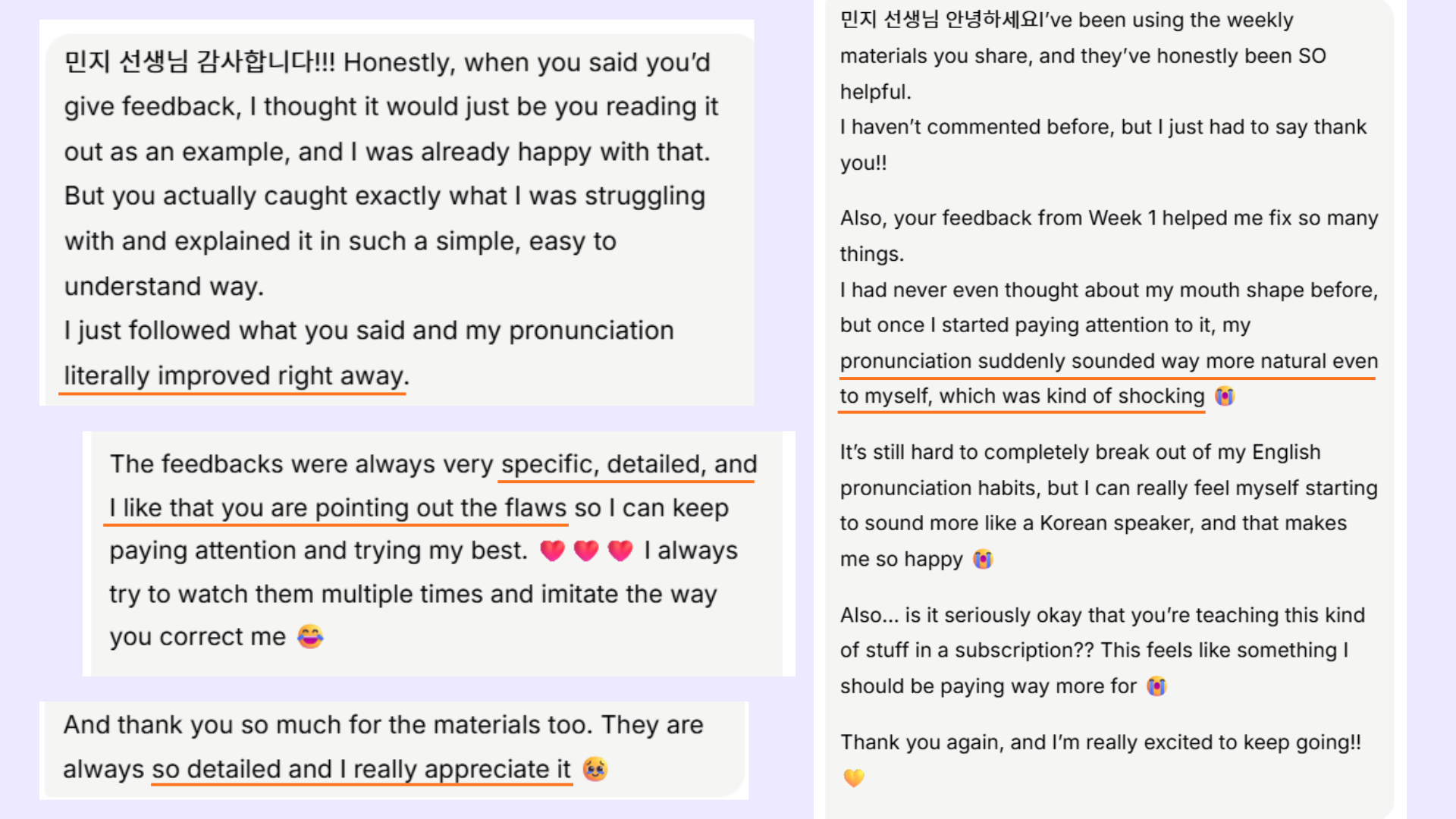
Because this is private 1:1 coaching, you'll get focused, personalized guidance in a supportive and fully private environment. Students have been highly satisfied with the feedback, and many saw consistent improvement week by week.
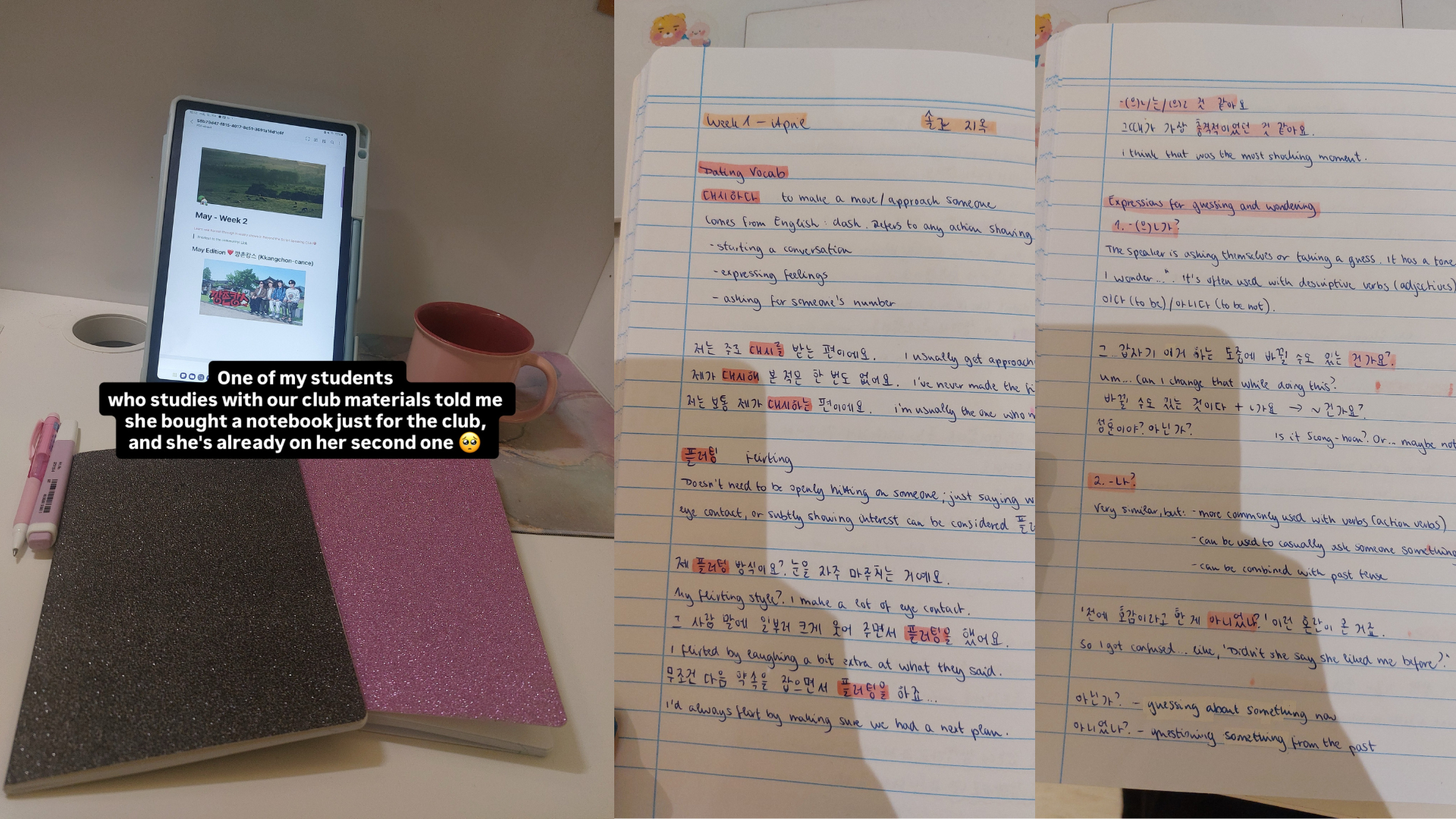
Not ready to commit? Start with a workbook.
Not quite ready to jump in? No problem.
You can get selected past workbooks from previous Beyond the Script sessions on their own.
Each one is built around a real variety show and focuses on how Korean actually gets spoken in real life, so you get the real scenes and natural conversations, the expressions Koreans actually use, and the cultural context behind why people say things the way they do. It's a perfect way to try the method before joining the full program.
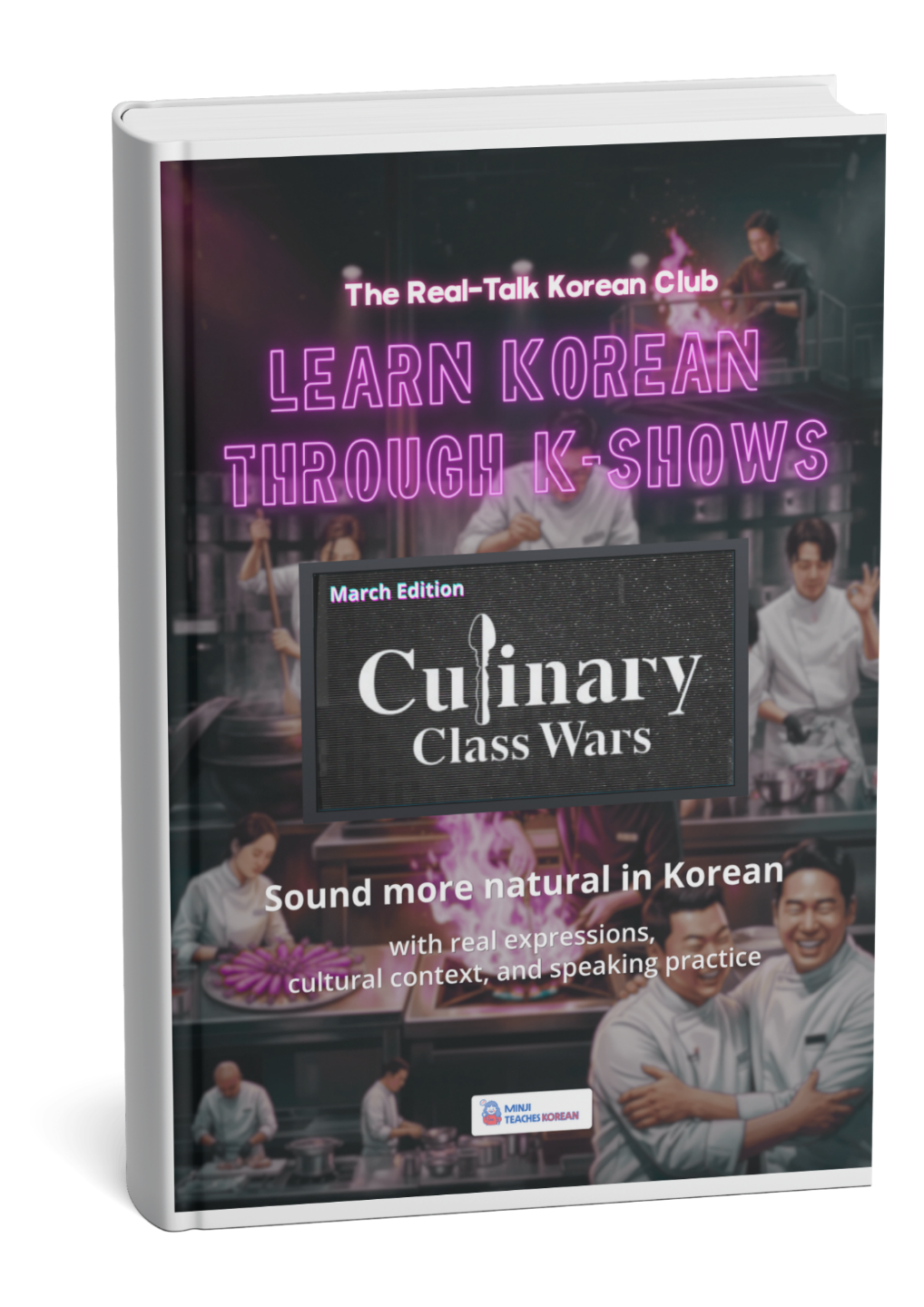

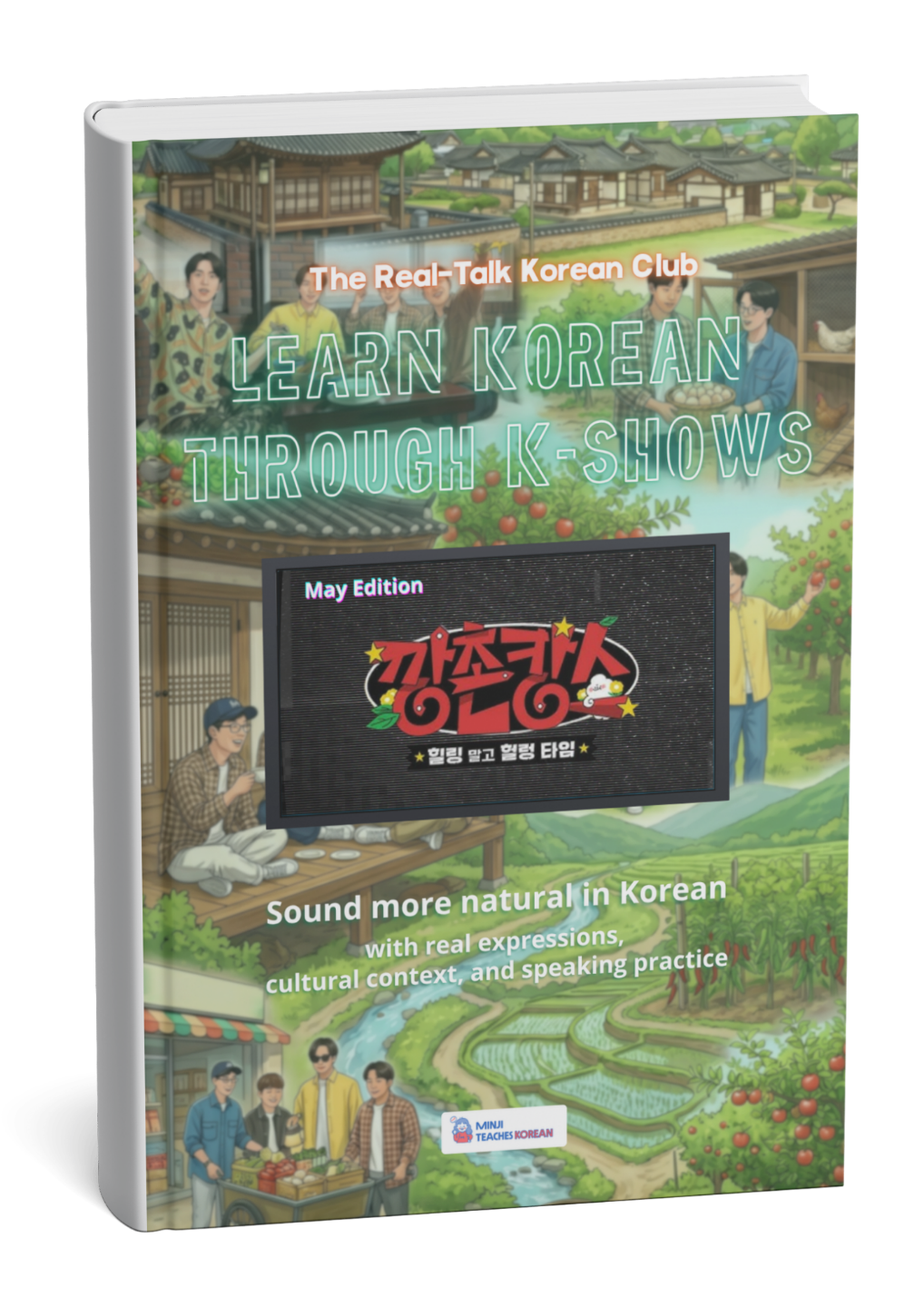
Note: These are workbook-only products. Personalized feedback is available inside the monthly program.
Why conversations still feel hard
You don’t lack vocabulary.
You don’t lack grammar.
You lack experience using Korean in motion.
You understand sentences.
But conversations don’t wait.
When a Korean speaks to you, you search for what to say.
By the time you find it, the moment is gone.
You never trained what happens after someone answers you.
So you stay stuck between understanding and speaking.
Why this club is different
I learned this the hard way.
Everyone told me to shadow actors.
So I did.
I could repeat lines almost perfectly.
But the moment a real person responded, I froze.
Not because I didn’t know English.
Because I didn’t know what to do next.
I had trained sentences.
I had never trained interaction.

So I changed one thing.
I stopped studying what people say
and started studying how conversations move.
Hesitation.
Overlap.
Short reactions.
Tone shifts.
Adding a thought after you speak.
I wasn’t memorizing lines anymore.
I was learning what usually comes next.
Then something strange happened.
Native speakers stopped complimenting my English.
They just… kept talking to me.
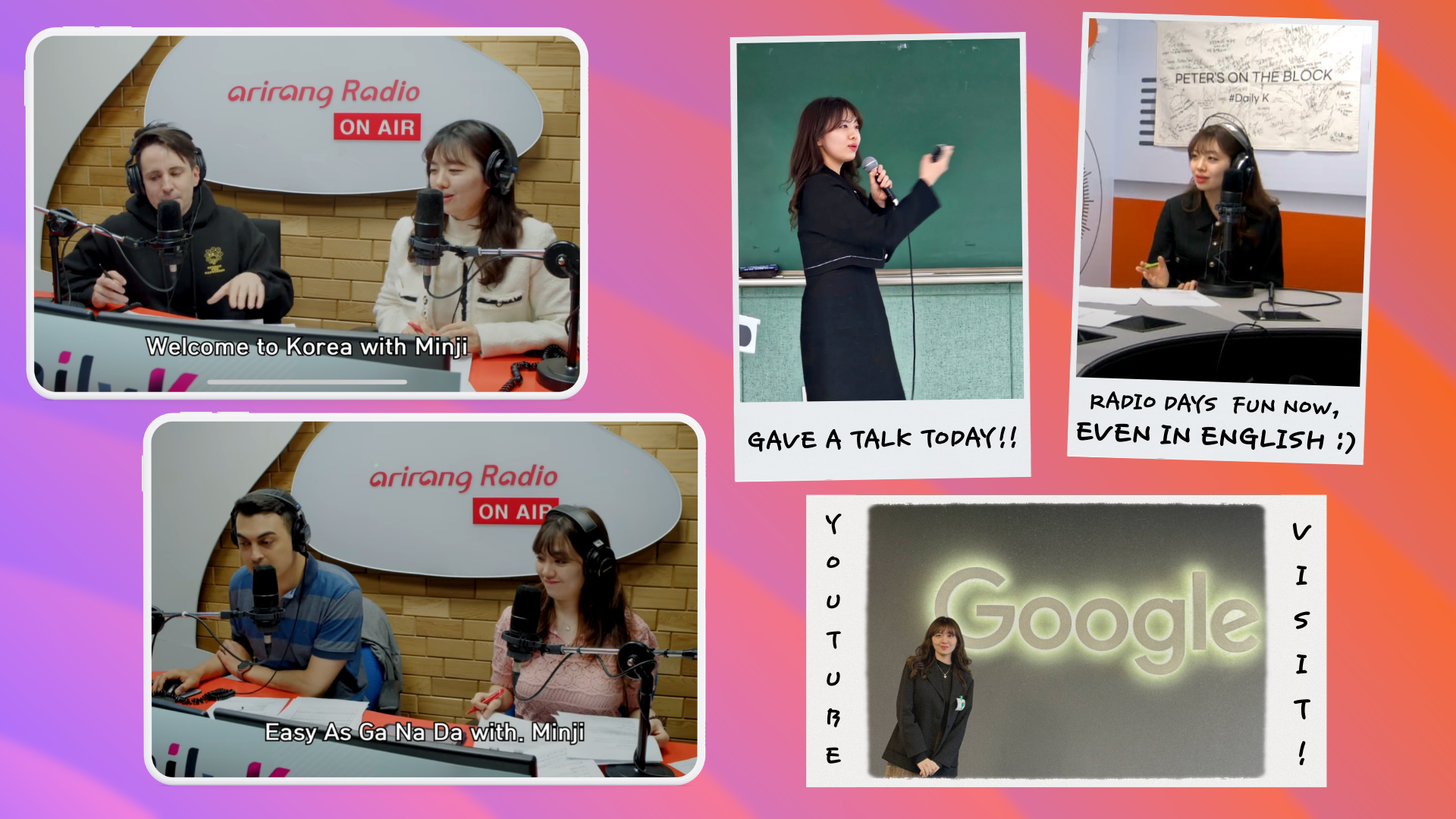
Long conversations.
Jokes.
Opinions.
Disagreements.
I later spoke live on English radio in Korea — without preparation.
But that wasn’t the real change.
The real change was this:
I stopped preparing English.
I started responding in it.
Most language learning never trains that moment —
the moment after someone answers you.
That’s why this club exists.
Why variety shows work
Dramas teach memorable lines. Real life requires usable reactions.
Scripted conversations sound good. Real conversations continue.
People hesitate.
They overlap.
They soften tone.
They adjust mid-sentence.
That’s what makes someone sound natural.
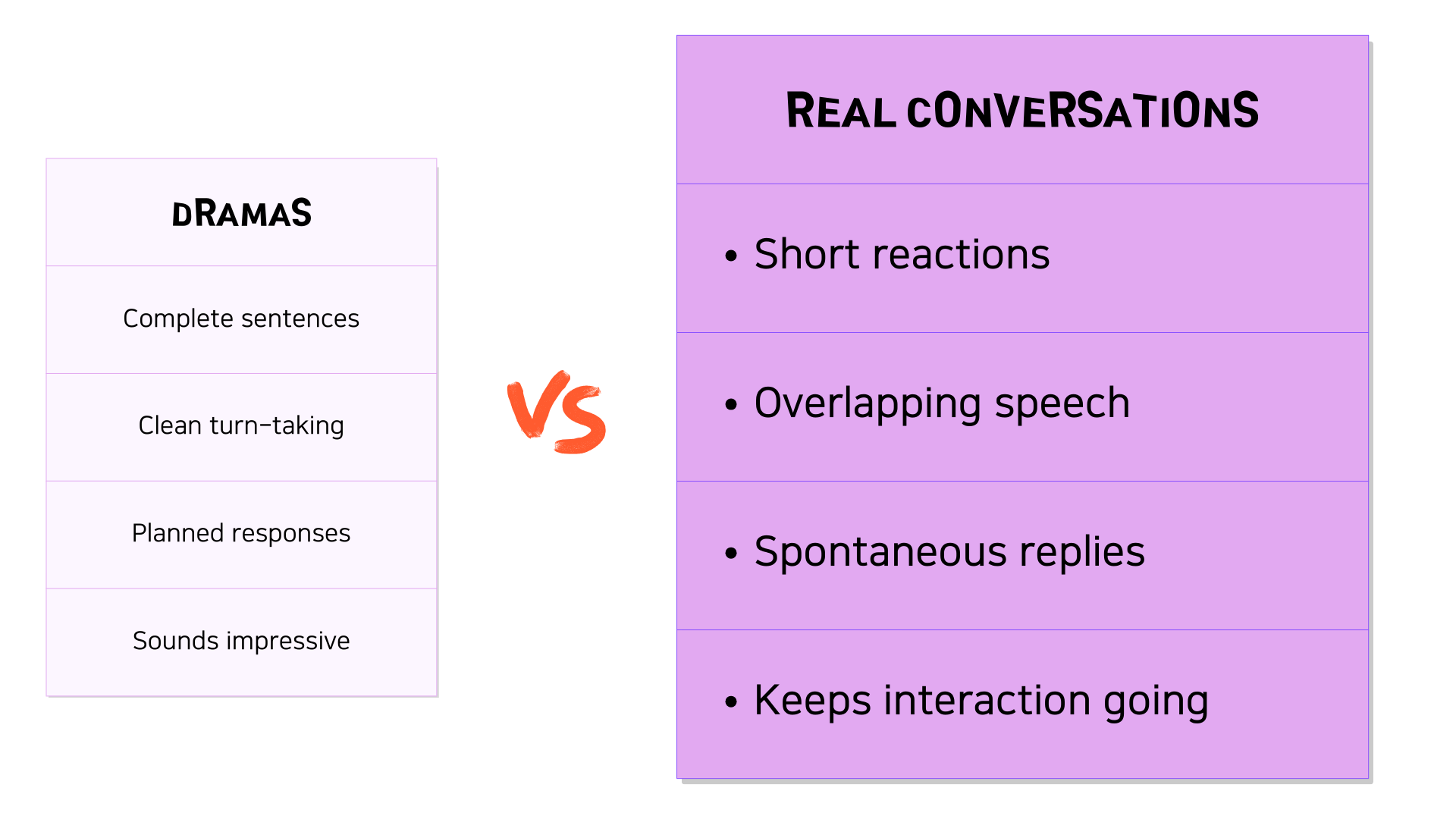
Most learners study Korean as finished sentences.
But conversations are moving patterns.
Beyond the Script trains that exact skill.
Not memorizing expressions — understanding how conversations move.
How you’ll actually practice
This course is designed to solve the exact struggles beginners face.
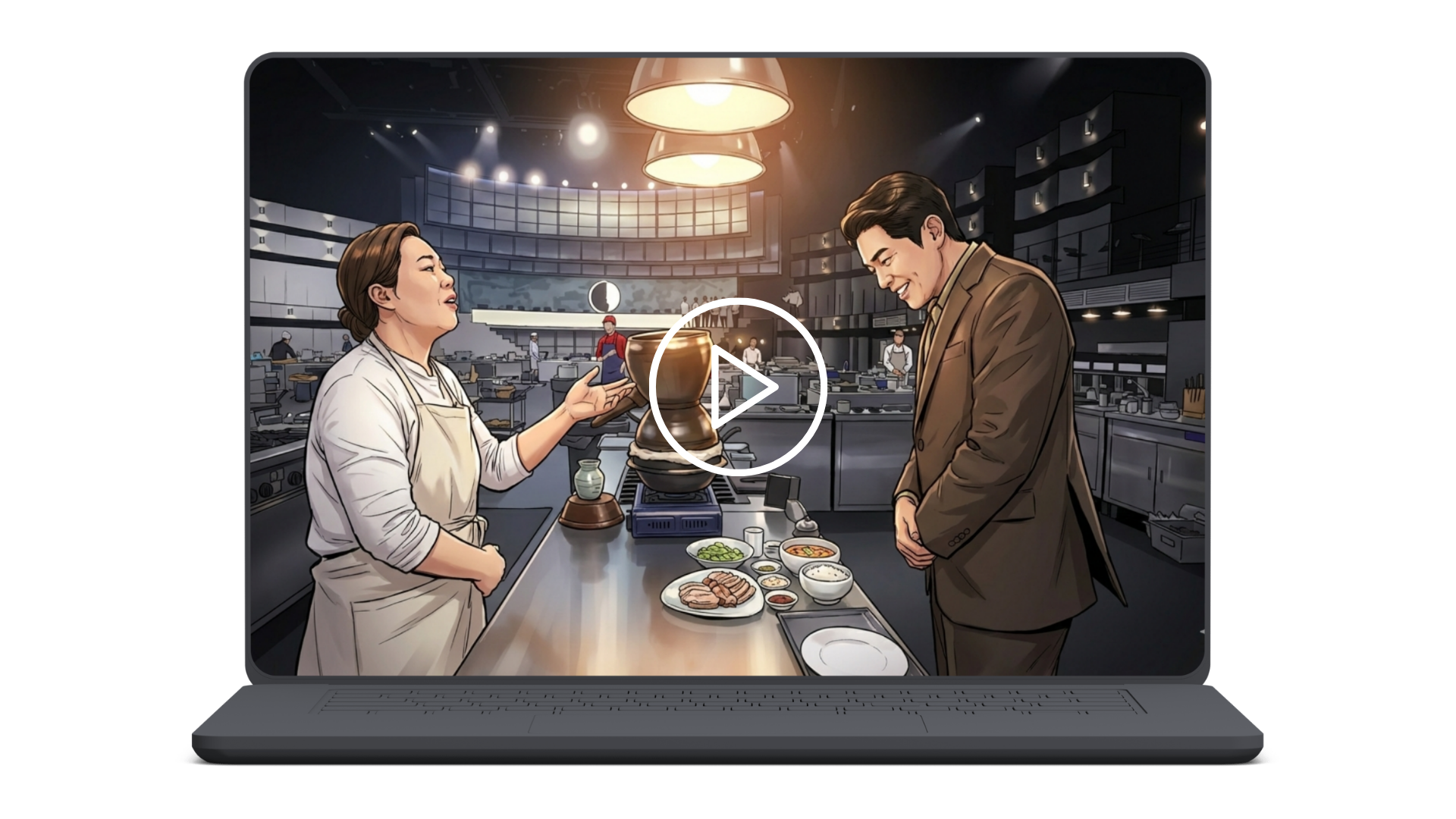
Step 1 — Watch
See how Koreans actually respond in real situations
A curated variety show clip with key expressions and patterns.
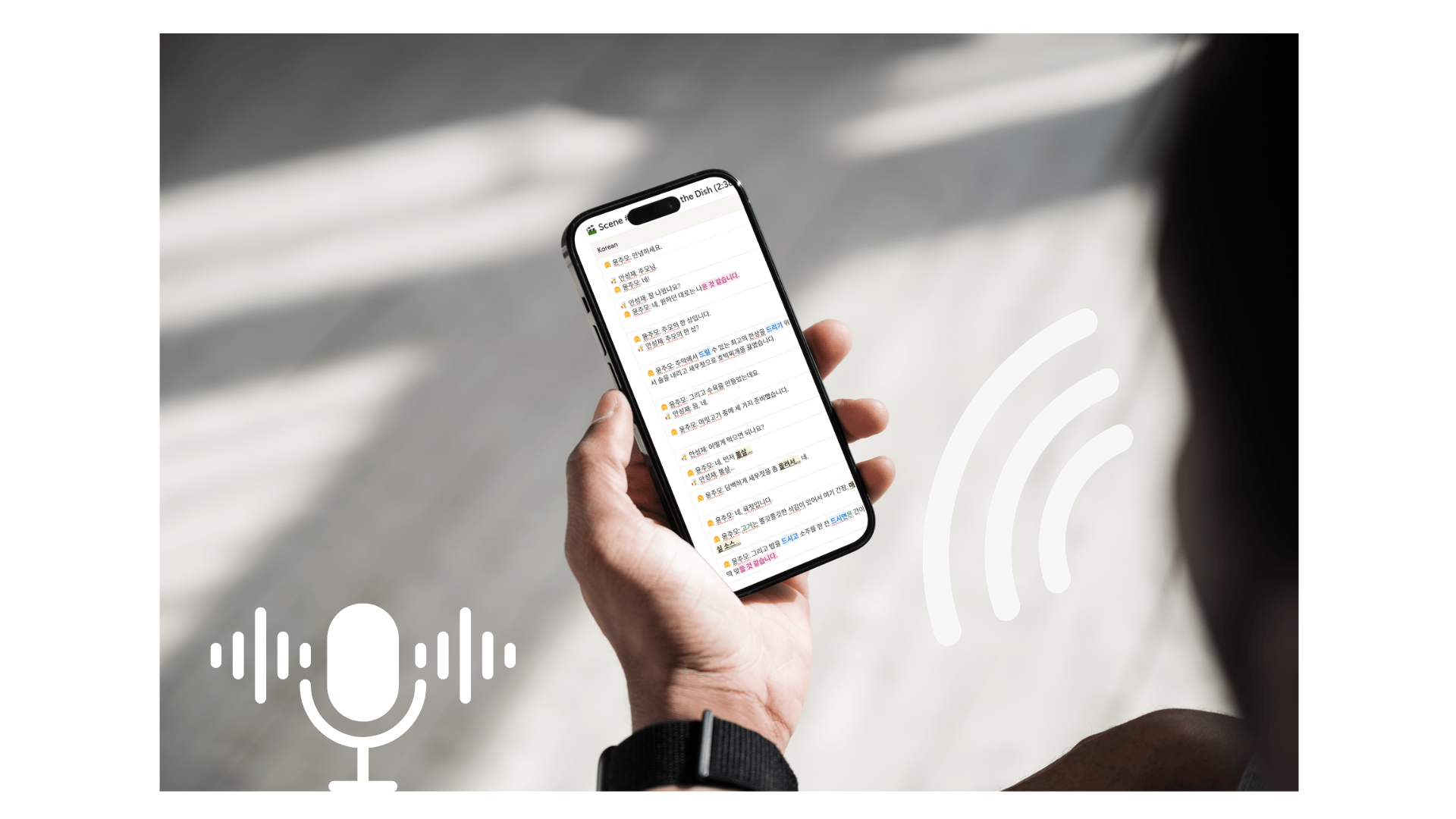
Step 2 — Build your response
Practice saying what you would say — not repeating lines
Use pattern notes, grammar cues, and cultural hints to create answers
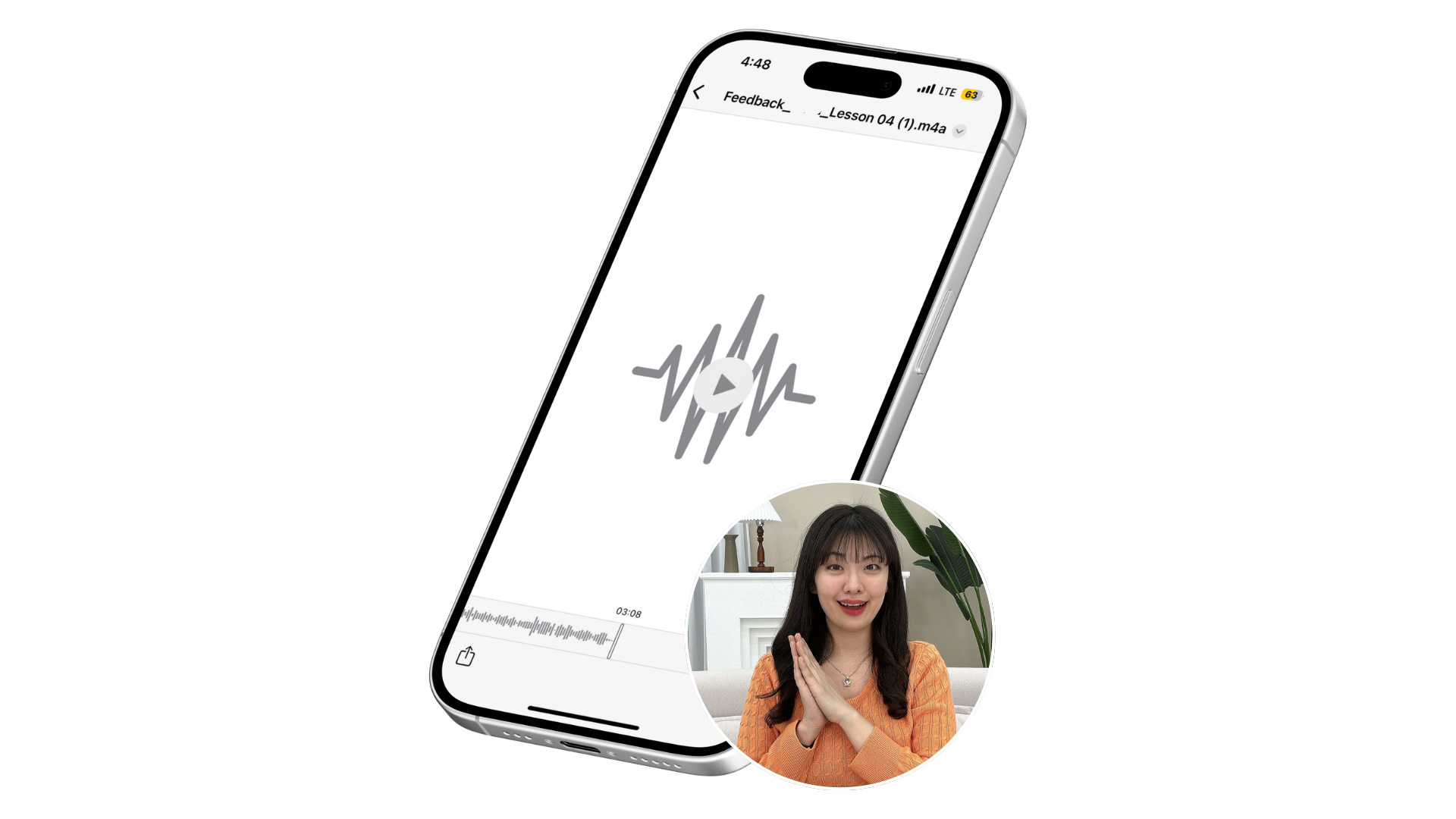
Step 3 — Personal Feedback
I tell you why your response sounds natural — or doesn’t
Pronunciation, intonation, tone, and conversational appropriateness
This is the actual material
you’ll practice with each week.
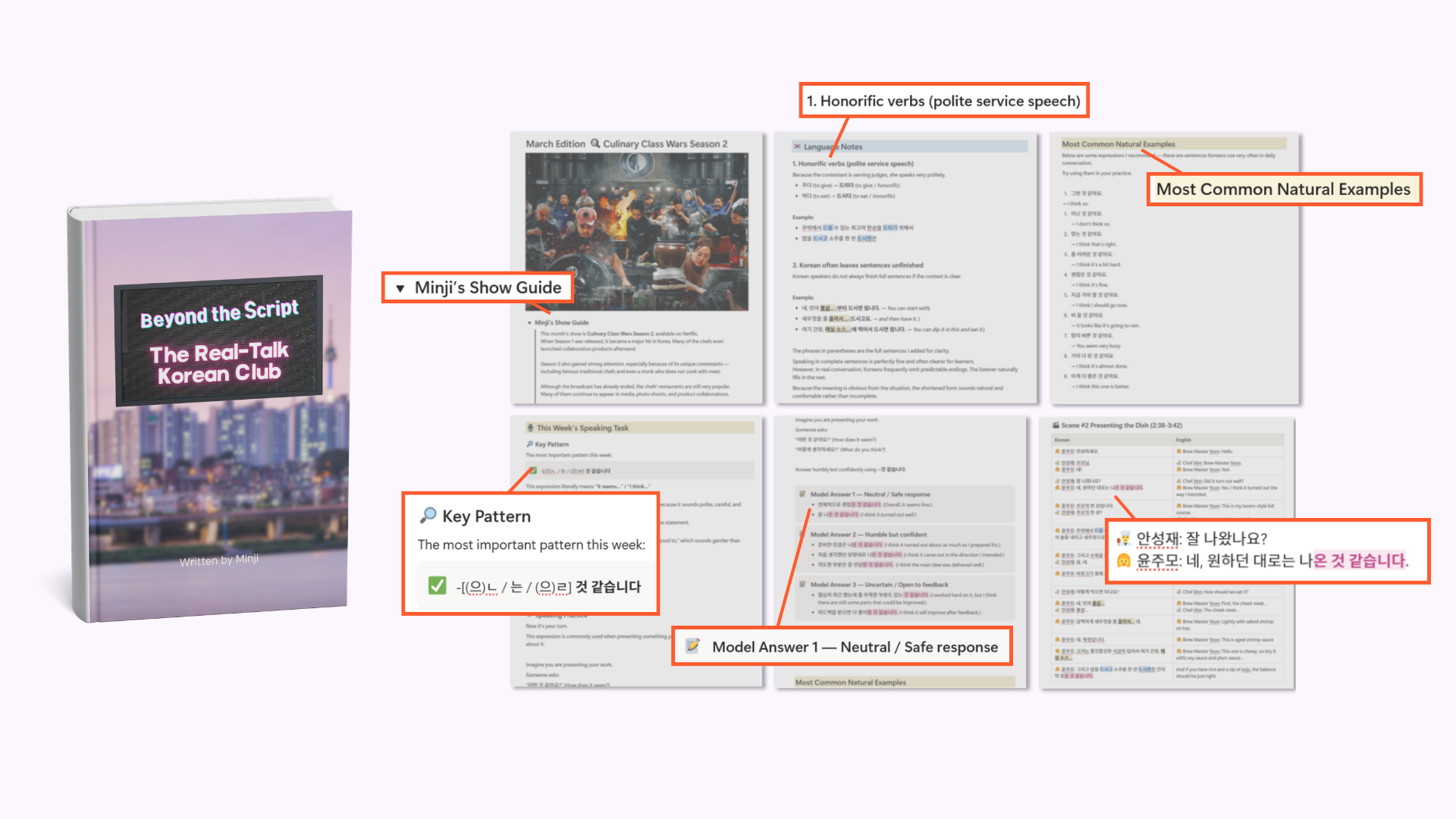
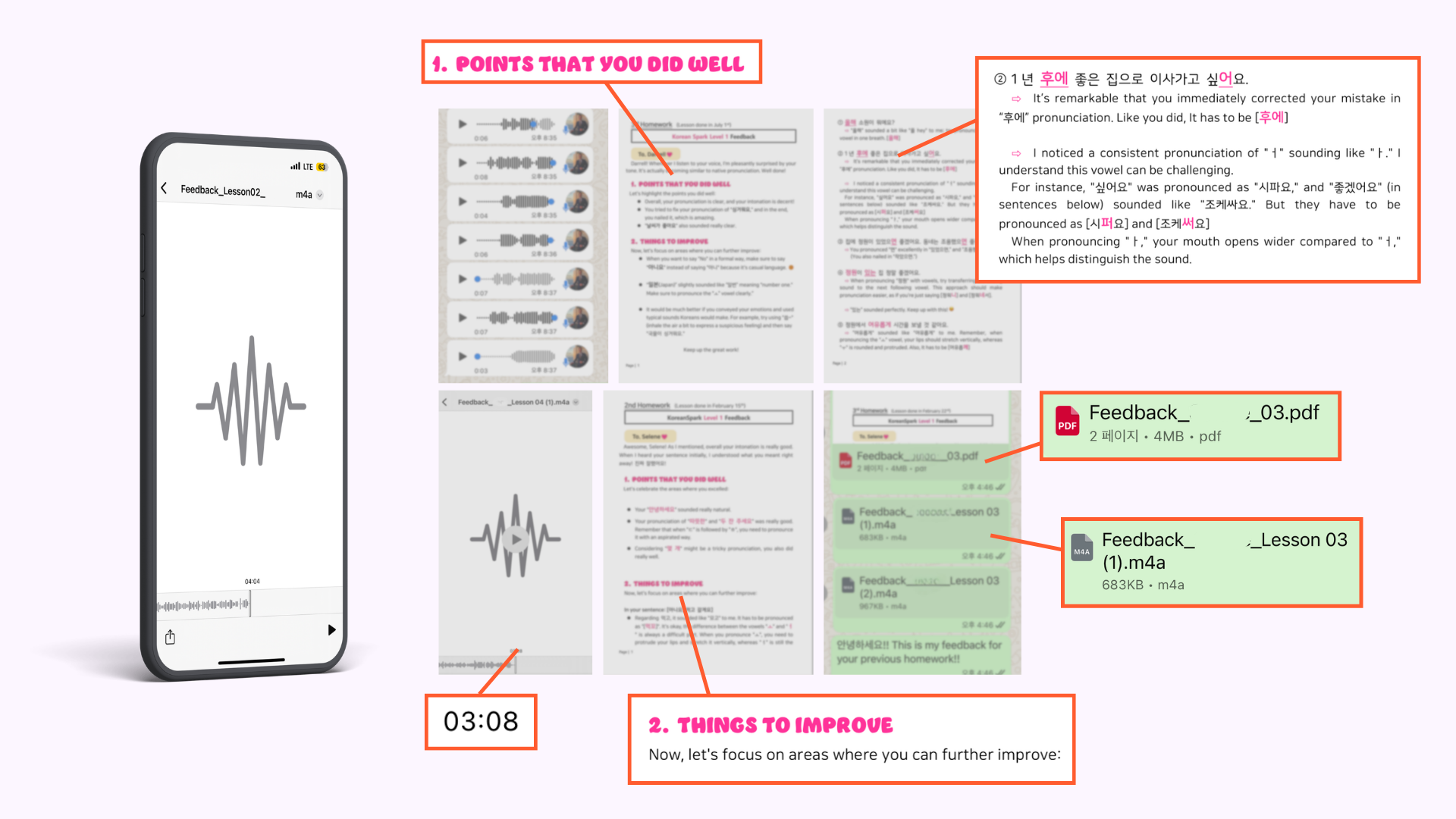
Every submission receives detailed correction like this.
Some reviews are several minutes long and include a written summary you can revisit anytime.
What starts to feel different
At first, nothing dramatic happens.
But what you notice begins to change.

Because now you have patterns, context, and cultural cues
working together instead of searching for grammar.
And one day you notice —
Instead of delivering one memorized line,
you naturally continue the conversation.
That’s when learners usually realize they’re not practicing Korean anymore.
They’re participating in it.
Shadowing trains reproduction.
Active pattern training builds conversation ability.
After months, the difference isn’t pronunciation.
It's how long you can stay in the conversation.
What you practice each month
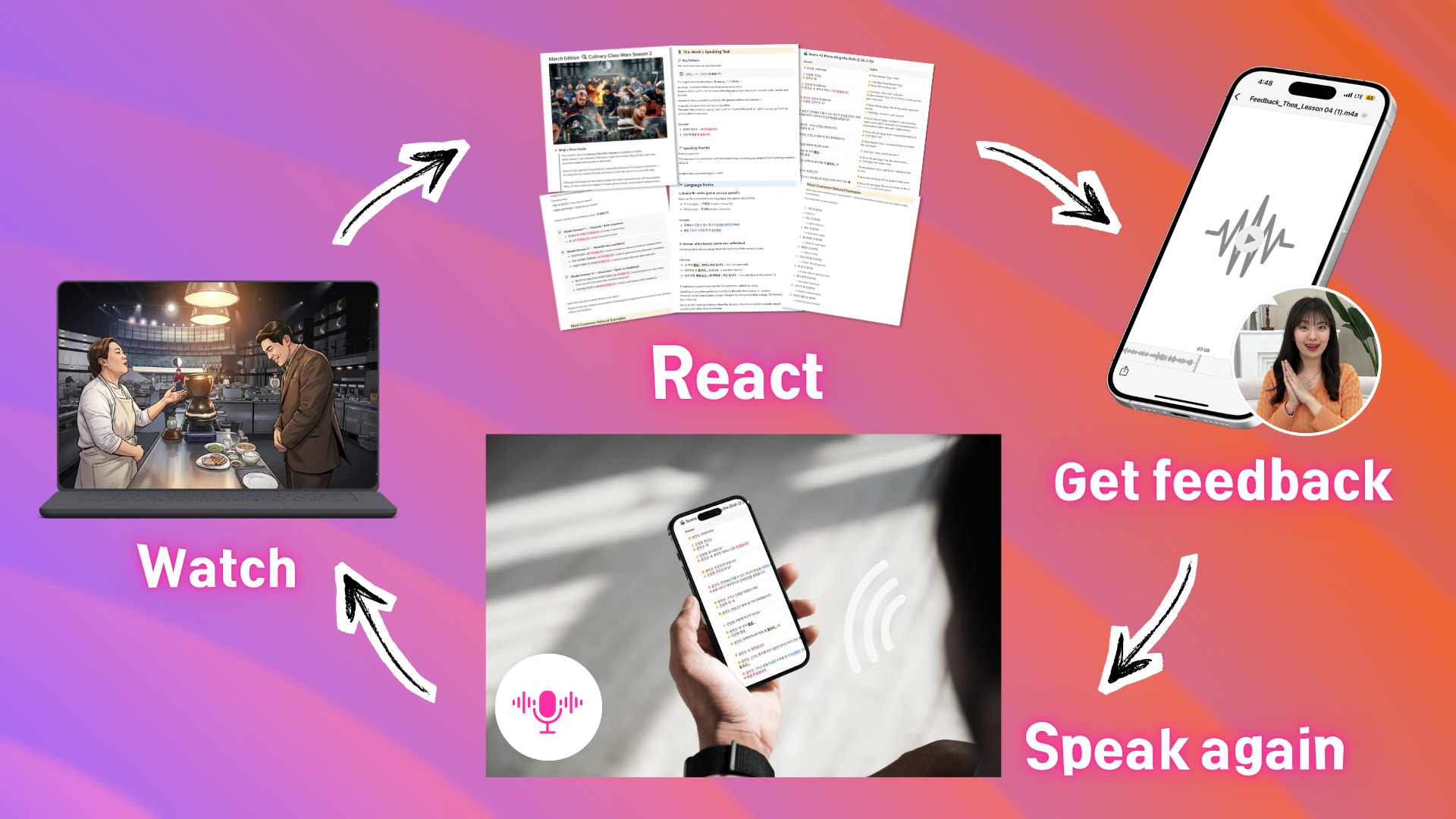
• Real variety show lesson
• Pattern-based speaking practice
• Voice recording assignments
• Personal correction & feedback
• Learner community
• Growing lesson archive
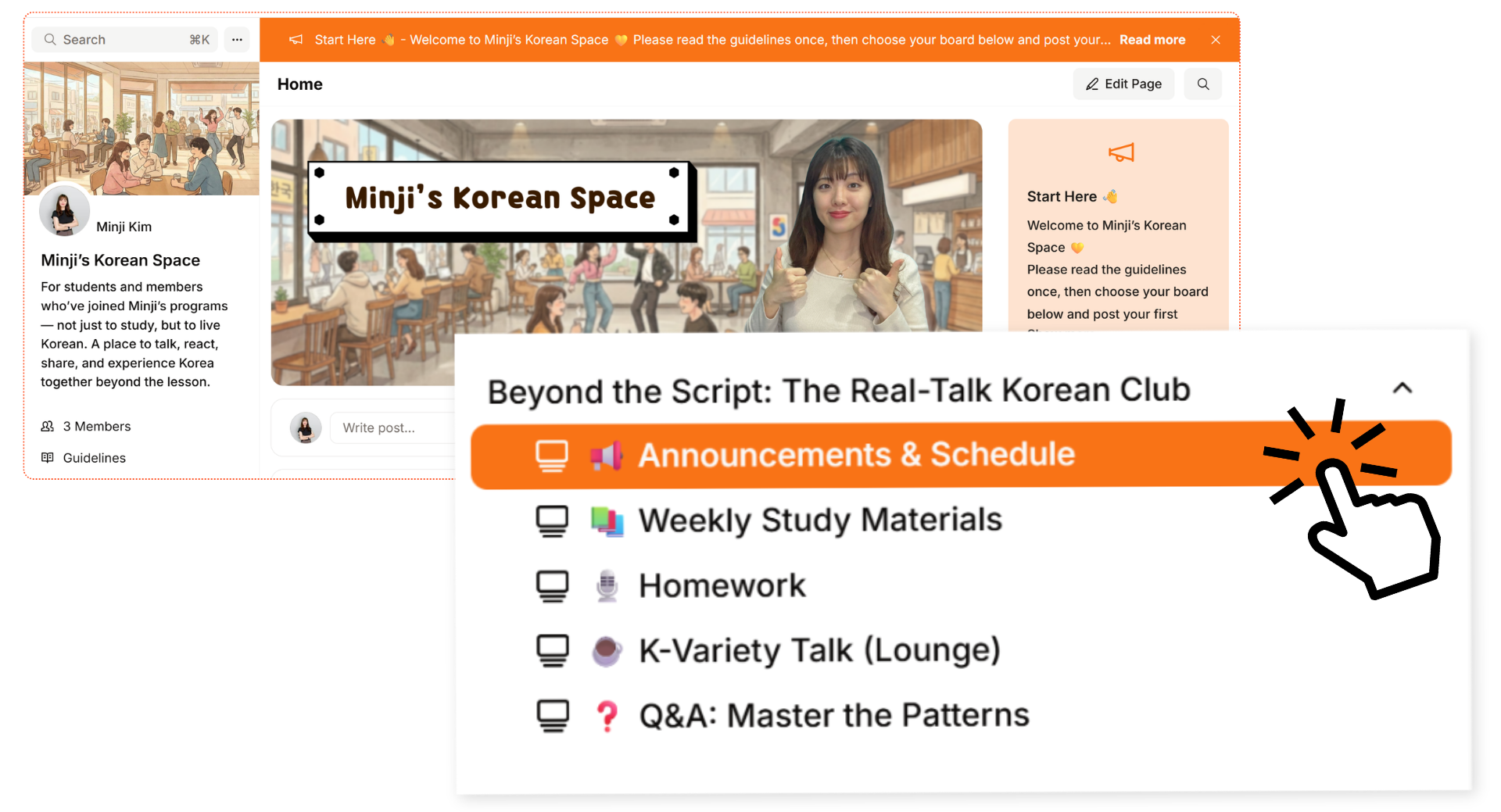
Not just submissions — conversations.
Talk about the show, ask questions, and see how others answered the same moment.
I’m there regularly too.
Before You Join
Q. Do I need to be fluent?
Q. What level is this for?
Q. Is this shadowing?
Q. What if I’m shy about recording?
Q. How often do I need to study?
Q. Will I get personal feedback?
Basic
$29
Start anytime. Stay as long as it helps you speak.
-
Curated variety show scenes explained in real context
-
Key speaking patterns you can reuse immediately
-
Personal feedback on how you actually sound
-
Cultural meaning behind reactions and tone
-
A space to talk about Korean, not just study it
-
A community that keeps you using the language
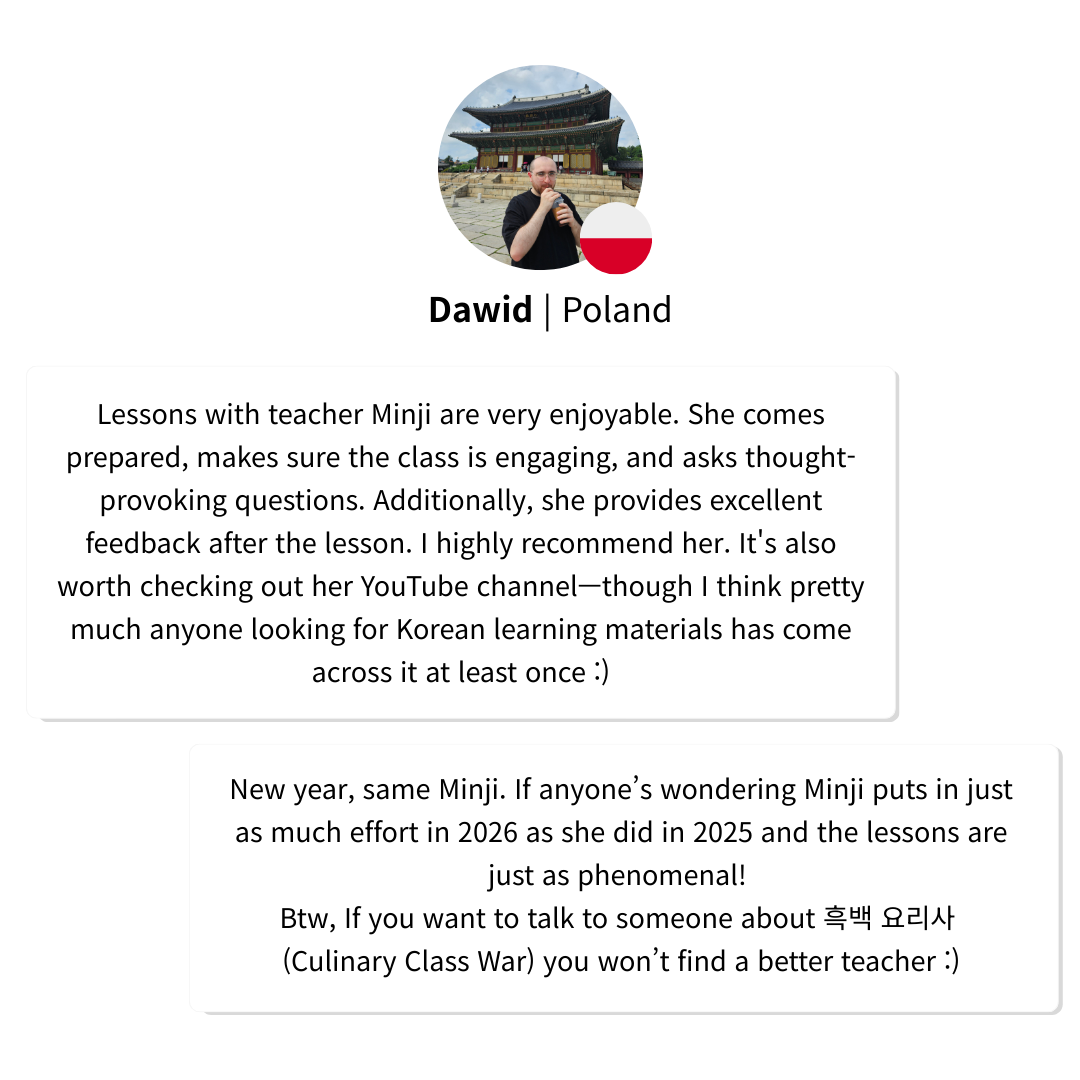
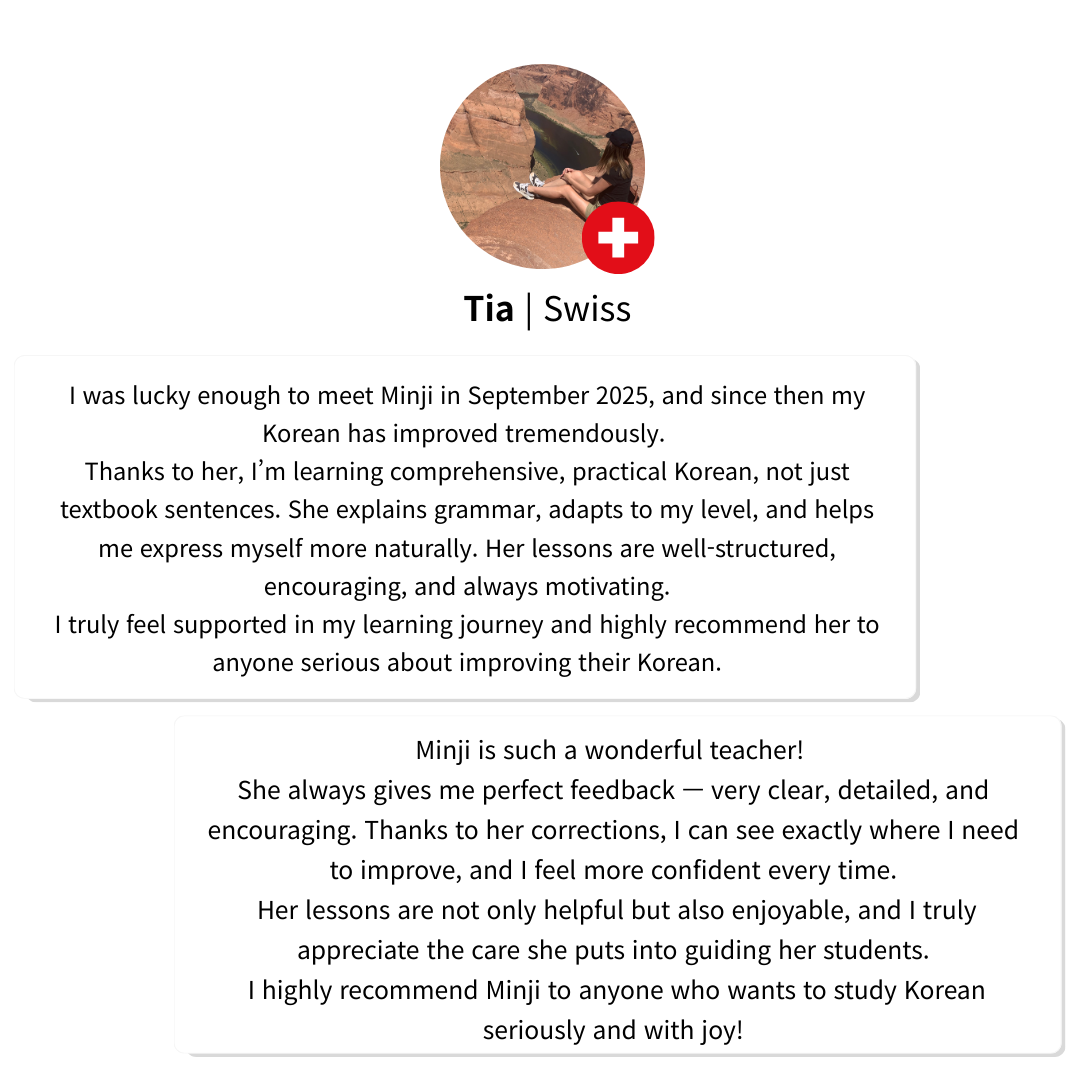
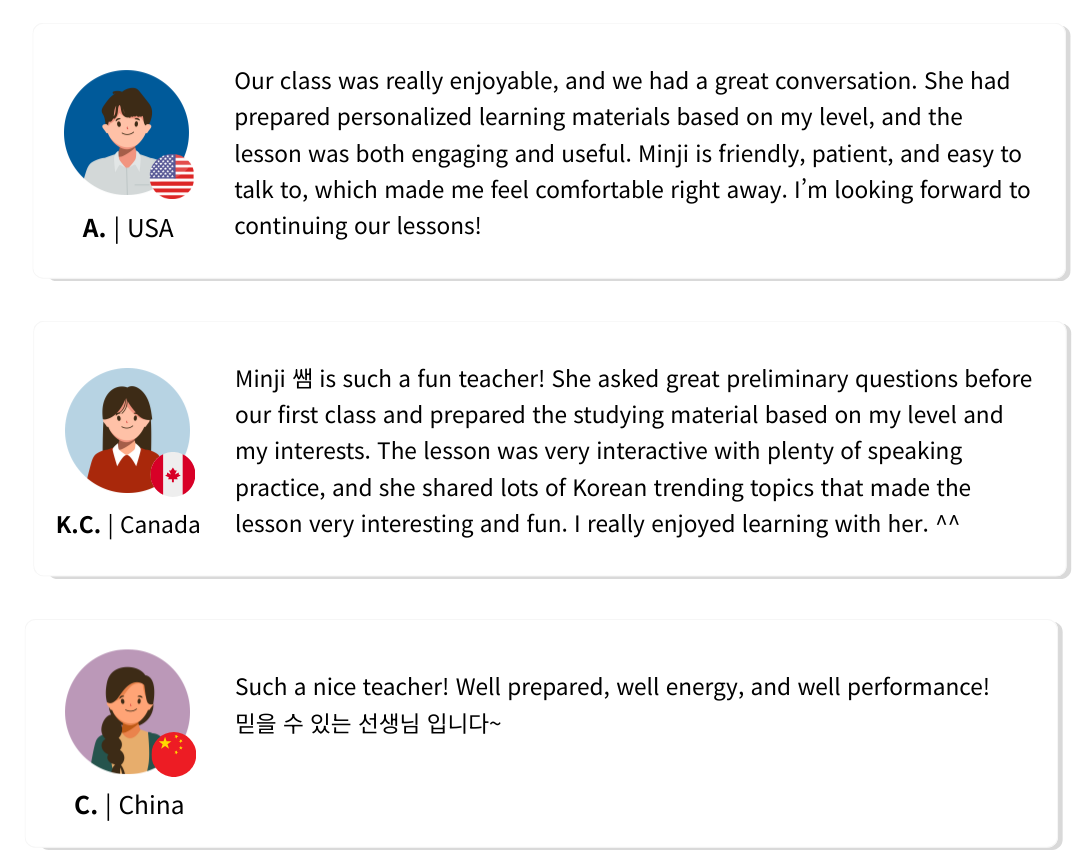
What learners noticed
You don’t need more study time.
You need response experience.
You don’t join because you’re ready.
You join to become ready.
Start participating in Korean.

Join Our Free Trial
Get started today before this once in a lifetime opportunity expires.